Christmas Baby Elephant Redwork Review for Business Merch
As an embroidery designer who spends most of my days digitizing logos and testing files for commercial production, I approach every new machine embroidery design with a critical eye. It is not just about whether a motif looks cute on a screen; it is about how that digital embroidery file translates into a tangible asset for a brand. Recently, I reviewed the Christmas Baby Elephant Redwork specifically to evaluate its potential for small business merchandise, branded patches, and seasonal promotional items. This review breaks down the visual personality, practical application, and technical considerations of using this design in a professional setting.
First Impressions: A Playful Yet Professional Aesthetic
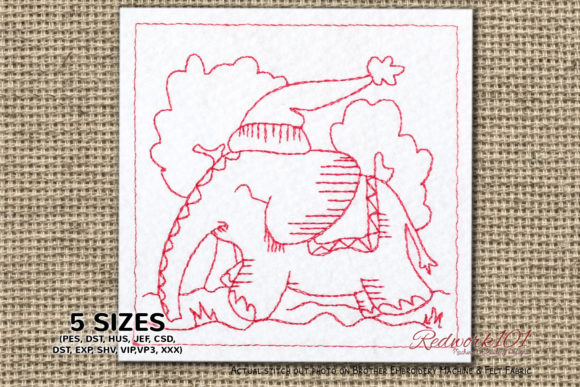
The immediate impression of the Christmas Baby Elephant Redwork is one of approachable charm. Redwork, by definition, relies on single-color outlining, which inherently lends itself to a rustic, handmade, and classic feel. However, when applied to a subject like a baby elephant adorned with holiday elements, the result strikes a balance between playful and elegant. For a small business owner, this is crucial. You do not want your staff uniforms or customer gifts to look childish unless that is your specific niche. This design feels friendly and inviting without sacrificing professionalism.
The simplicity of the redwork style ensures that the design does not overwhelm the fabric. In an era where minimalism often signals premium quality, this embroidery file offers a clean look that works well for boutique cafes, florists, pet brands, and creative studios looking to add a touch of seasonal warmth to their branding. The lack of heavy fill stitches means the design breathes, making it an excellent candidate for items where comfort and flexibility are priorities.
Real-World Applications for Small Business Merch
When considering where to deploy the Christmas Baby Elephant Redwork, the versatility is surprising. For a local bakery or coffee shop, this design serves as a perfect accent for staff aprons. Unlike large chest logos that can stiffen the fabric, a redwork design on an apron pocket or sleeve adds character without restricting movement. It acts as a conversation starter for customers, reinforcing the brand identity as warm and community-focused.
For retail boutiques and Etsy sellers, this design shines as an embroidered patch. Because redwork involves fewer stitches and less density, it adheres well to twill or canvas backings used in patch manufacturing. Imagine a limited-edition holiday tote bag featuring this elephant; the tote bag design would appeal to shoppers looking for unique, non-mass-produced holiday gear. Furthermore, because the description notes that "The Box Stitch shown in picture is optional," designers have the flexibility to integrate the elephant directly into existing brand marks or use it as a standalone element on custom apparel.
This design is also highly effective for cap embroidery. The low stitch count and open nature of redwork prevent the puckering that often plagues curved surfaces like baseball caps. A small version of this elephant on the side panel of a beanie or a dad hat could serve as a subtle holiday marker for a team uniform, distinguishing seasonal staff from year-round employees while maintaining a cohesive look.
Technical Considerations and Production Notes
While the aesthetic appeal is high, a professional review must address the technical realities of production. The product description states, "The color of outer Box is different color in most of the designs unless it is part of the design itself, you can skip the color dir." This is a vital instruction for the embroiderer. Before loading this machine embroidery design into your hoop, you must decide if the bounding box serves a purpose for your specific application. For most commercial runs, skipping the box color stop saves time and reduces thread breaks, streamlining the production of hundreds of units.
There are specific scenarios where caution is required. If you intend to use this as a tiny label on a garment neck or a small tag on a handmade product, you must verify the stitch density and spacing at that reduced scale. Redwork relies on continuous lines; if scaled down too far, these lines may merge or break, losing the definition of the elephant's features. Always test the design on the actual fabric texture you plan to use. Terry cloth towels, for instance, may swallow fine redwork lines, whereas smooth cotton or poly-cotton blends will yield crisp results.
Additionally, since this is a seasonal Christmas theme, consider the thread colors carefully. While traditional redwork uses red thread, adapting the thread colors to match your specific brand palette—perhaps using navy, forest green, or gold—can make the design feel more integrated into your year-round design assets. However, ensure the contrast remains high enough against dark uniforms to maintain visibility.
Essential Checklist for Commercial Use
Before committing to a large run of commercial embroidery projects featuring the Christmas Baby Elephant Redwork, I recommend the following workflow to ensure quality and consistency:
- Test in Monochrome First: Stitch a sample in black thread on white fabric to verify line integrity and spacing before introducing color variables.
- Verify Hoop Size: Confirm the required hoop size fits your machine's capabilities, especially if placing the design on restricted areas like cap fronts or sock cuffs.
- Stabilizer Selection: Even with low-density redwork, using the proper stabilizer is non-negotiable to prevent shifting during the stitch-out, particularly on stretchy fabrics.
- Create a Printable Mockup: Generate a printable mockup to show clients or stakeholders how the design looks on the finished product before stitching begins.
- Review Licensing: Confirm the commercial licensing terms of the digital embroidery file to ensure you are authorized to sell items featuring this design.
- Check Scalability: Ensure the design holds up at the smallest intended size, such as on a pocket square or a small patch.
Impact on Brand Identity and Customer Trust
Incorporating a thoughtful design like the Christmas Baby Elephant Redwork into your merchandise strategy does more than just decorate an item; it elevates the perceived value of your handmade product or service. Customers associate high-quality embroidery with attention to detail and durability. When a client receives a tote bag or an apron with a cleanly stitched, charming design, it reinforces trust in your business.
For businesses selling physical goods, adding this design as a limited-time offer can drive engagement. It signals that your brand is active, festive, and cares about the presentation of its goods. Whether used as a gift with purchase for a florist or a special edition logo for a pet boutique, this design helps create a memorable unboxing experience. It transforms a standard utility item into a keepsake, encouraging customers to keep and use the merchandise long after the holiday season has passed, thereby extending your brand's visibility.
In conclusion, the Christmas Baby Elephant Redwork is a robust choice for small business owners and embroidery professionals alike. Its adaptability across various substrates, combined with the efficiency of the redwork style, makes it a smart addition to any holiday catalog. By paying attention to the optional box stitch and testing for scale, you can leverage this design to create professional, engaging, and high-value merchandise that resonates with your audience.