Santa Sleigh Gifts Bluework: A Designer's Review
As an embroidery designer who spends countless hours digitizing and testing files for commercial use, I approach every new machine embroidery design with a critical eye. It is not just about whether the image looks cute on a screen; it is about how that digital embroidery file translates into a tangible asset for a small business. Today, I am reviewing Santa Sleigh Gifts Bluework, a seasonal design that holds significant potential for branded merchandise, provided it is executed with the right technical considerations.
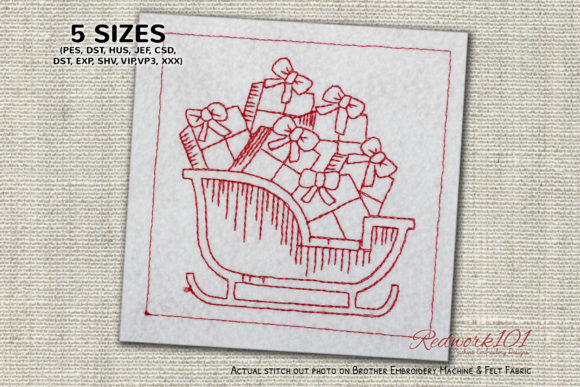
My first impression of Santa Sleigh Gifts Bluework is that it strikes a balance between playful charm and classic holiday tradition. The "Bluework" designation suggests a monochromatic or limited palette focus, which often lends itself well to a cleaner, more sophisticated look compared to overly vibrant, multi-colored cartoons. For a boutique, bakery, or creative studio looking to elevate their small business merch during the holidays, this aesthetic is crucial. It feels less like a child's drawing and more like a deliberate brand accent. However, the product description notes that "The Box Stitch shown in picture is optional," which immediately signals to me that versatility is built into this file. This is a vital feature for professional applications where framing might clash with specific garment styles or patch shapes.
Real-World Application for Branded Merchandise
When evaluating Santa Sleigh Gifts Bluework for real-world business scenarios, I imagine several specific use cases where this design could drive customer engagement. For a local café or florist, this design would make an excellent apron embroidery detail. Placed on the bib or the lower corner of an apron, it adds a festive touch to staff uniforms without overwhelming the brand's primary logo. Because the outer box is optional, you can integrate the sleigh directly onto dark fabrics without worrying about a contrasting square background that might look out of place.
Another strong application is in the realm of embroidered patch creation. Many handmade brands and Etsy sellers are moving away from sewn-on labels and toward custom patches that can be ironed or stitched onto tote bags, beanies, and denim jackets. If you are creating a limited-edition holiday run of custom apparel, this design serves as a perfect secondary mark. Imagine a canvas tote bag design where the main brand logo is large and central, but the sleeve or bottom corner features this sleigh motif as a subtle nod to the season. It enhances the perceived value of the finished product, making it feel like a special gift rather than standard inventory.
For cap embroidery, the simplicity of the bluework style is advantageous. Caps have curved surfaces and limited stitch areas. A design with too much fill or complex shading can pucker the fabric or lose definition. Assuming the digitizing accounts for the curve, Santa Sleigh Gifts Bluework could work beautifully on the side panel of a baseball cap or the front of a beanie, especially if the optional box is removed to allow the design to breathe within the confined space.
Technical Considerations and Production Risks
While the artistic potential is high, there are technical hurdles we must address before running this through a commercial machine. The most critical factor is stitch density. In bluework styles, designers sometimes rely on dense satin stitches to create depth. If this design is too dense, it will become stiff and may cause fabric distortion, particularly on stretchy materials like jersey knits used for t-shirts or lightweight cottons used for bandanas. Before committing to a large production run, I strongly advise testing the file on a scrap piece of your actual production fabric.
Furthermore, the note regarding the optional box stitch requires careful attention during the hooping process. You need to confirm the hoop size required for the version with the box versus the version without it. If you intend to skip the box color to match a dark uniform, ensure that the jump stitches or trim commands in the embroidery file are logical. Poorly placed jumps can lead to thread nests on the back of the garment, which is unacceptable for professional commercial embroidery projects.
Fabric texture also plays a massive role here. If you are applying this to a textured towel or a rough canvas bag, fine details in the sleigh or the gifts might get lost. I recommend running a test in black and white thread first. This removes the variable of thread colors and allows you to see the structural integrity of the stitching. If the design holds up in high-contrast black and white, it will likely perform well in color. Additionally, always use the proper stabilizer. For items that will undergo frequent washing, such as staff uniforms or customer gifts, a cut-away stabilizer is often safer than tear-away to prevent the design from shifting or puckering over time.
Impact on Brand Identity and Customer Trust
In the context of brand identity, consistency is key. Using a design like Santa Sleigh Gifts Bluework can reinforce a sense of warmth and attention to detail. When a customer receives a package with a branded patch featuring this design, or sees it on a staff member's chest, it signals that the business invests in quality presentation. It moves the needle from "generic holiday decoration" to "curated brand experience."
However, professionalism dictates that we do not guess at the specifications. Since the product description does not provide exact stitch counts, specific file formats (like .PES, .DST, or .EXP), or explicit license terms, you must verify these details before selling any items made with this design. Commercial licensing is non-negotiable. Ensure that your purchase allows for the sale of physical goods, not just personal use. Creating a printable mockup for client approval is also a wise step. Show your clients how the design assets will look on their specific products before you stitch a single thread. This manages expectations and builds trust.
Ultimately, Santa Sleigh Gifts Bluework offers a versatile foundation for holiday branding. Whether used as a subtle sleeve detail on a work shirt, a standout feature on a limited-edition tote, or a charming addition to a handmade product line, its success lies in the execution. By respecting the technical limits of your machinery, choosing the right stabilizers, and thoughtfully integrating the optional elements, you can transform a simple digital file into a powerful tool for customer connection. As we head into the busy season, let this design remind us that even small embroidered accents can carry big brand value.