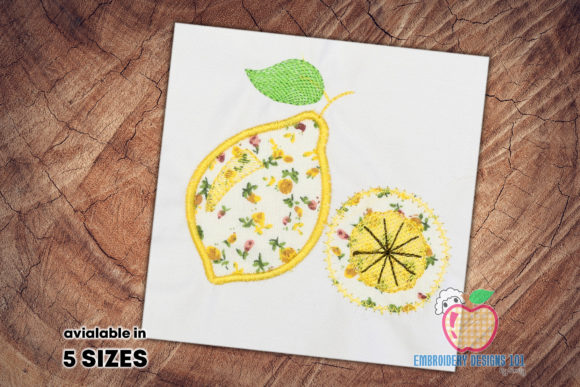
Lemon with the Lemon Slice: A Designer's Review for Business Merch
As an embroidery designer who spends countless hours digitizing and testing files for commercial use, I approach every new machine embroidery design with a critical eye. It is not enough for a file to look cute on a screen; it must withstand the rigors of industrial machines, varied fabric textures, and the demanding gaze of customers. Today, I am reviewing Lemon with the Lemon Slice, a food-themed appliqué design that holds significant potential for small business merchandising. This review focuses on how this specific digital embroidery file translates from a download to a tangible asset for cafes, boutiques, and creative studios.
First Impressions: Visual Personality and Brand Fit
Upon loading the embroidery file into my simulation software, the immediate impression of Lemon with the Lemon Slice is one of vibrant freshness and approachable charm. The inclusion of both a whole lemon and a slice suggests a duality that works well for branding: the whole fruit represents abundance and nature, while the slice implies service, refreshment, and detail. For businesses in the Food category, such as bakeries, juice bars, or farm-to-table cafes, this design feels inherently aligned with their brand identity. It strikes a balance between playful and professional, avoiding the overly cartoonish look that can sometimes cheapen a brand, while maintaining enough whimsy to feel handmade and authentic.
The fact that the steps are separated by color is a crucial feature for professional users. This structure allows for precise thread changes and ensures that the transition between the yellow zest, the white pith, and any green leaf accents remains crisp. In a commercial setting, clean color stops are essential for maintaining high production speeds and minimizing thread breaks.
Real-World Application for Small Business Merch
The true test of any design asset is its versatility across different products. Lemon with the Lemon Slice shines when applied to custom apparel and accessories. Imagine a local coffee shop looking to upgrade their staff uniforms. Applying this design as a chest logo accent on dark navy work shirts creates an instant pop of color that reinforces the shop's fresh, citrus-infused menu items. Because it is an appliqué design, it adds texture and dimension that flat stitching cannot achieve, elevating the perceived value of the uniform.
For retail environments, this design is perfect for embroidered patch creation. Patches are a booming trend in small business merch, allowing brands to sell low-cost, high-margin add-ons. A lemon-themed patch could be sewn onto canvas tote bags, denim jackets, or even pinned to aprons sold in a boutique kitchenware store. The tactile nature of the appliqué makes the finished product feel premium, encouraging customer engagement and social media sharing.
Furthermore, for Etsy sellers and crafters, this design serves as an excellent element for handmade product embellishment. It can be stitched onto baby bibs, kitchen towels, or summer hats, providing a cohesive theme for seasonal collections. The ability to use this machine embroidery design across multiple machine formats means that whether you are running a single-needle home setup or a multi-head commercial fleet, the file is ready to deploy.
Technical Considerations and Placement Strategy
While the aesthetic appeal is strong, a professional reviewer must address the technical challenges of applying Lemon with the Lemon Slice. Appliqué designs involve layers of fabric and satin stitching, which increases the overall thickness. This requires careful consideration regarding stitch density and placement. On curved surfaces, such as the front of a structured cap, the bulk of the appliqué might cause puckering if the base fabric is too lightweight. For cap embroidery, I recommend using a stiffer buckram backing and ensuring the design size is optimized so the edges do not wrap too aggressively around the curve.
Similarly, when using this design for tote bag design projects, the fabric texture plays a massive role. Canvas and heavy cotton twill are ideal candidates because they can support the weight of the appliqué without distorting. However, if a client requests this on a thin poly-cotton blend for a promotional shirt, the risk of the fabric pulling away from the stitches increases. In these cases, selecting the correct stabilizer is non-negotiable. A cut-away stabilizer is often superior for appliqué work on garments that will undergo frequent washing, as it provides permanent support to the dense stitching areas.
Another area requiring caution is scale. If a business intends to use this as a tiny label on packaging or a small sleeve detail, the details of the lemon slice segments might merge together if the hoop size limits force the design to be resized too small. It is vital to check the minimum recommended size provided with the file to ensure the "slice" detail remains distinct and does not turn into a solid yellow blob.
Impact on Brand Identity and Customer Trust
In the competitive landscape of small business, visual consistency is key to building trust. Using a high-quality, professionally reviewed design like Lemon with the Lemon Slice signals to customers that a brand cares about quality. A sloppy, poorly digitized logo on an apron or bag can subconsciously suggest that the food or service provided is equally careless. Conversely, a crisp, well-executed embroidered logo enhances brand identity and professionalism.
This specific design helps humanize a brand. The organic shape of the lemon combined with the precision of machine embroidery creates a narrative of "crafted with care." For a florist or a pet brand using citrus themes, this design acts as a recognizable mark of quality. When customers see consistent branding across staff uniforms, packaging accents, and merchandise, it reinforces recognition and loyalty. The vibrant yellow associated with lemons also psychologically triggers feelings of energy and happiness, which can positively influence buyer engagement.
Practical Notes for the Professional Embroiderer
Before committing to a large production run for a client, I always follow a strict protocol when testing new files like Lemon with the Lemon Slice:
- Test in Black and White First: Convert your simulation to grayscale to check contrast. Ensure the outline of the slice is visible against the body of the lemon without relying solely on color differences.
- Verify Scale: Stitch a sample at the smallest intended size to confirm that the appliqué edges and slice details do not collapse.
- Check Thread Contrast: Select thread colors that offer sufficient contrast between the lemon flesh, the rind, and the background fabric, especially if using dark uniforms.
- Fabric Testing: Always test on the actual fabric the client intends to use. Fabric texture can drastically alter how the satin stitches lay.
- Stabilizer Selection: Match the stabilizer weight to the fabric and the density of the appliqué to prevent tunneling or puckering.
- Create a Printable Mockup: Before stitching, generate a printable mockup to show the client exactly how the design will look on their specific garment.
- Commercial Licensing: Since this is for business use, confirm the licensing terms included with the digital embroidery file to ensure you are cleared for commercial embroidery projects.
It is important to note that while the description states the design comes with multiple file formats and color-separated steps, exact specifications such as stitch count, specific hoop dimensions, and detailed license terms were not explicitly provided in the brief product description. Therefore, it is highly advisable to download the preview or contact the vendor to verify these technical details before promising a delivery date to a client.
In conclusion, Lemon with the Lemon Slice is a robust contender for small business branding. Its versatility across apron embroidery, patches, and apparel, combined with its cheerful aesthetic, makes it a valuable addition to any embroiderer's library. With proper attention to stabilizer choice and sizing, this design can elevate a brand's physical presence, turning simple merchandise into powerful marketing tools.